Cal Poly Sexual and Reproductive Health Lab
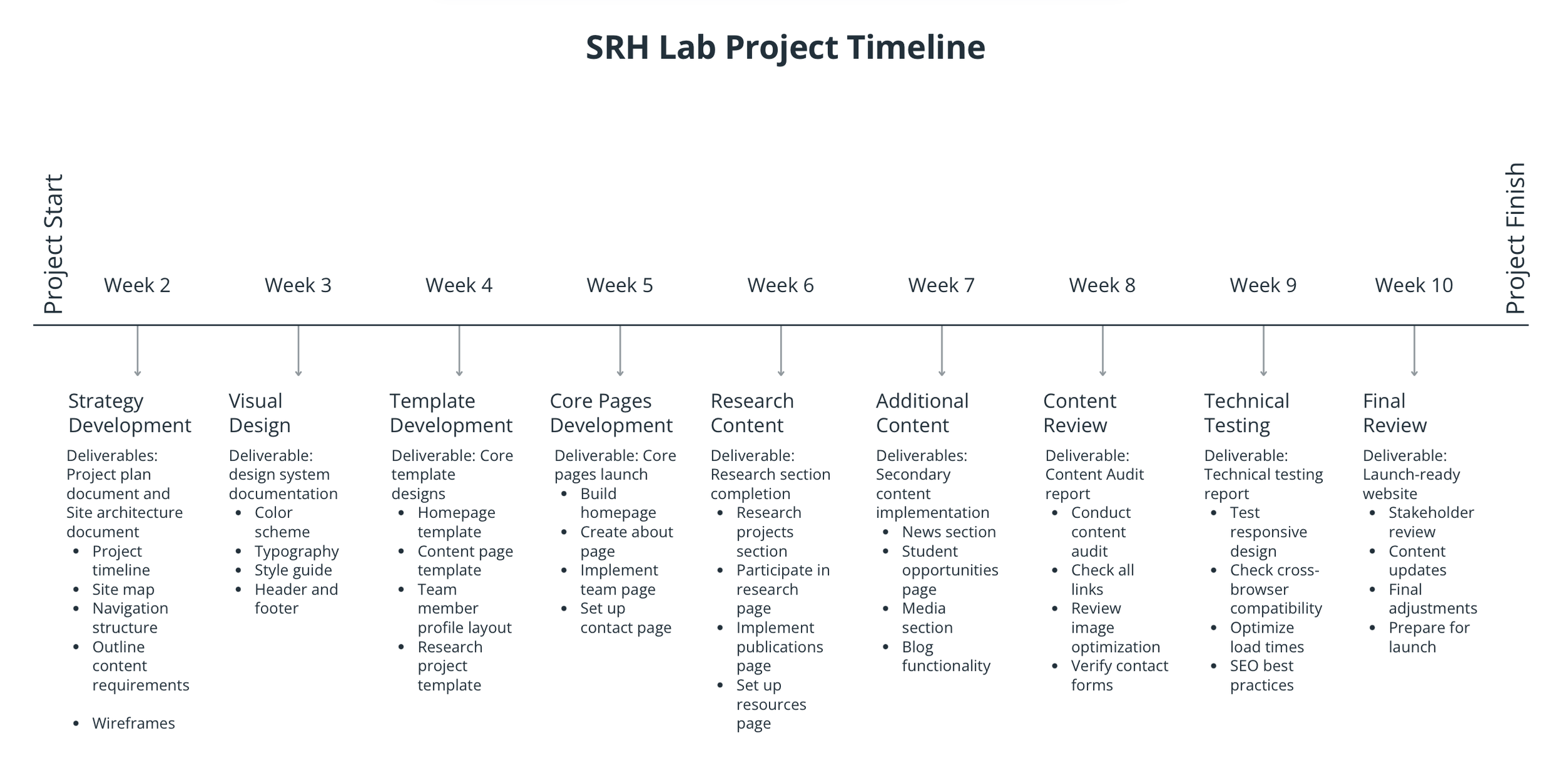
Project Length: 20 weeks
Roles: UX/UI Designer, UX Researcher, Graphic Designer
Tools: Squarespace, Figma, Qualtrics
Overview
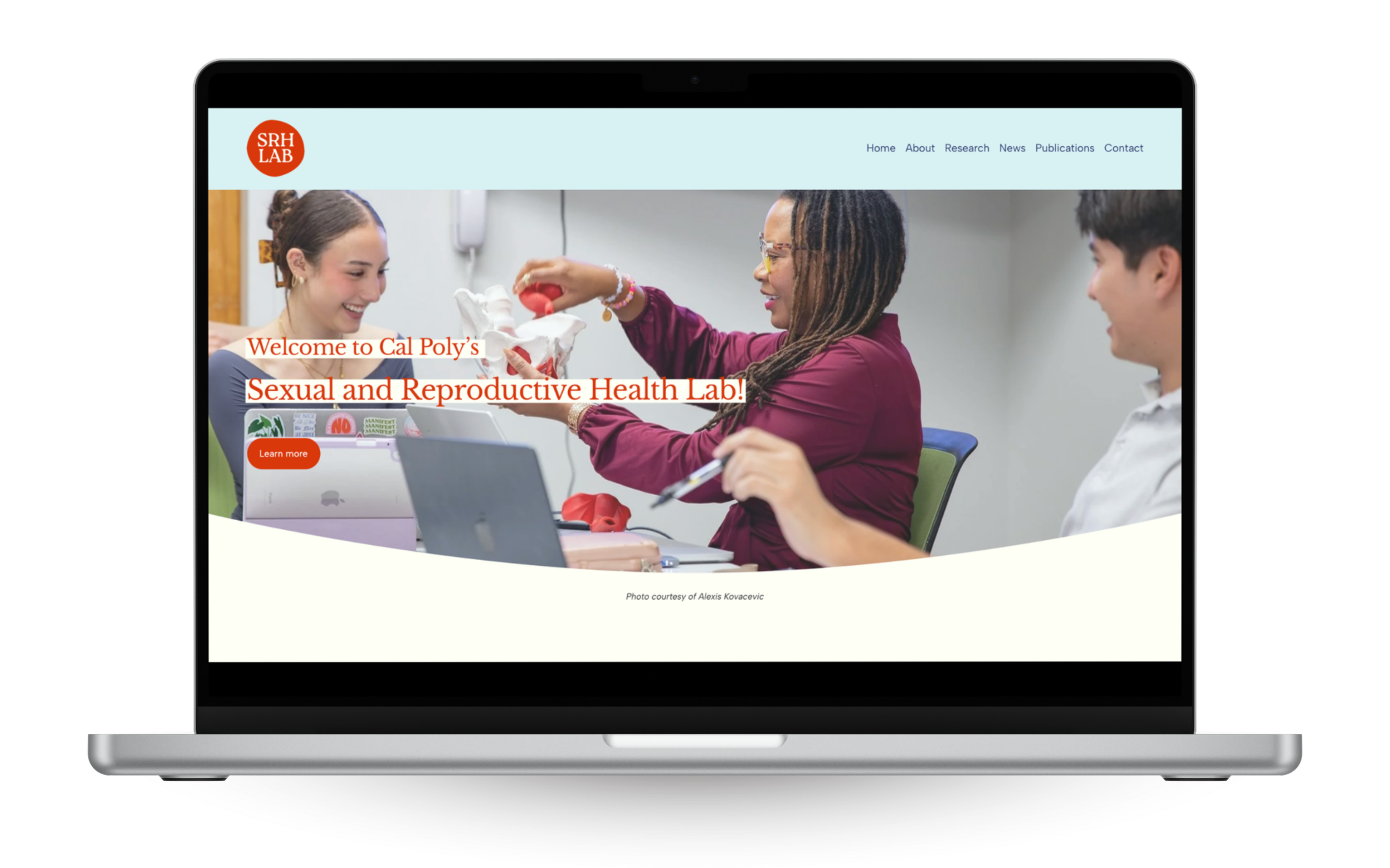
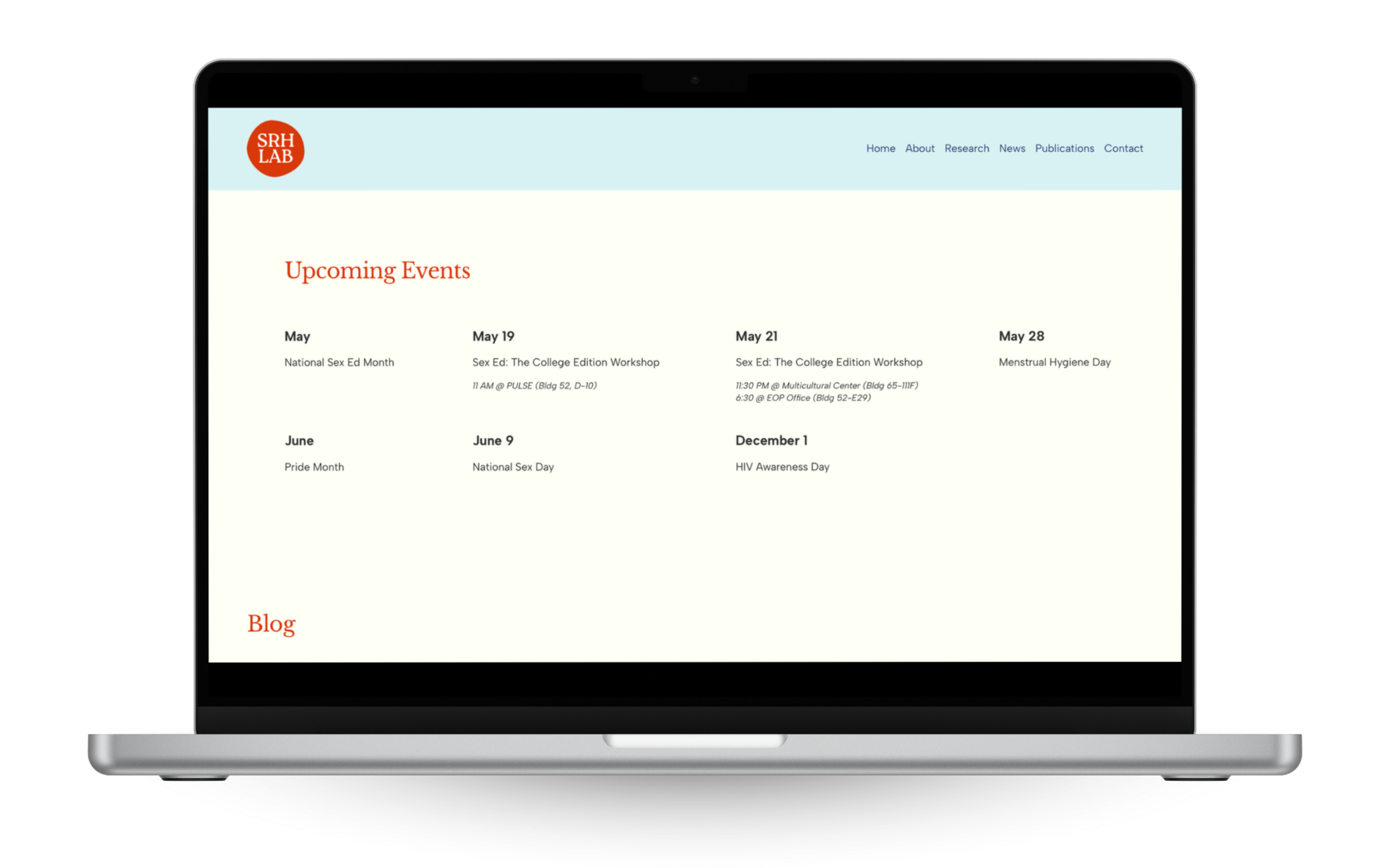
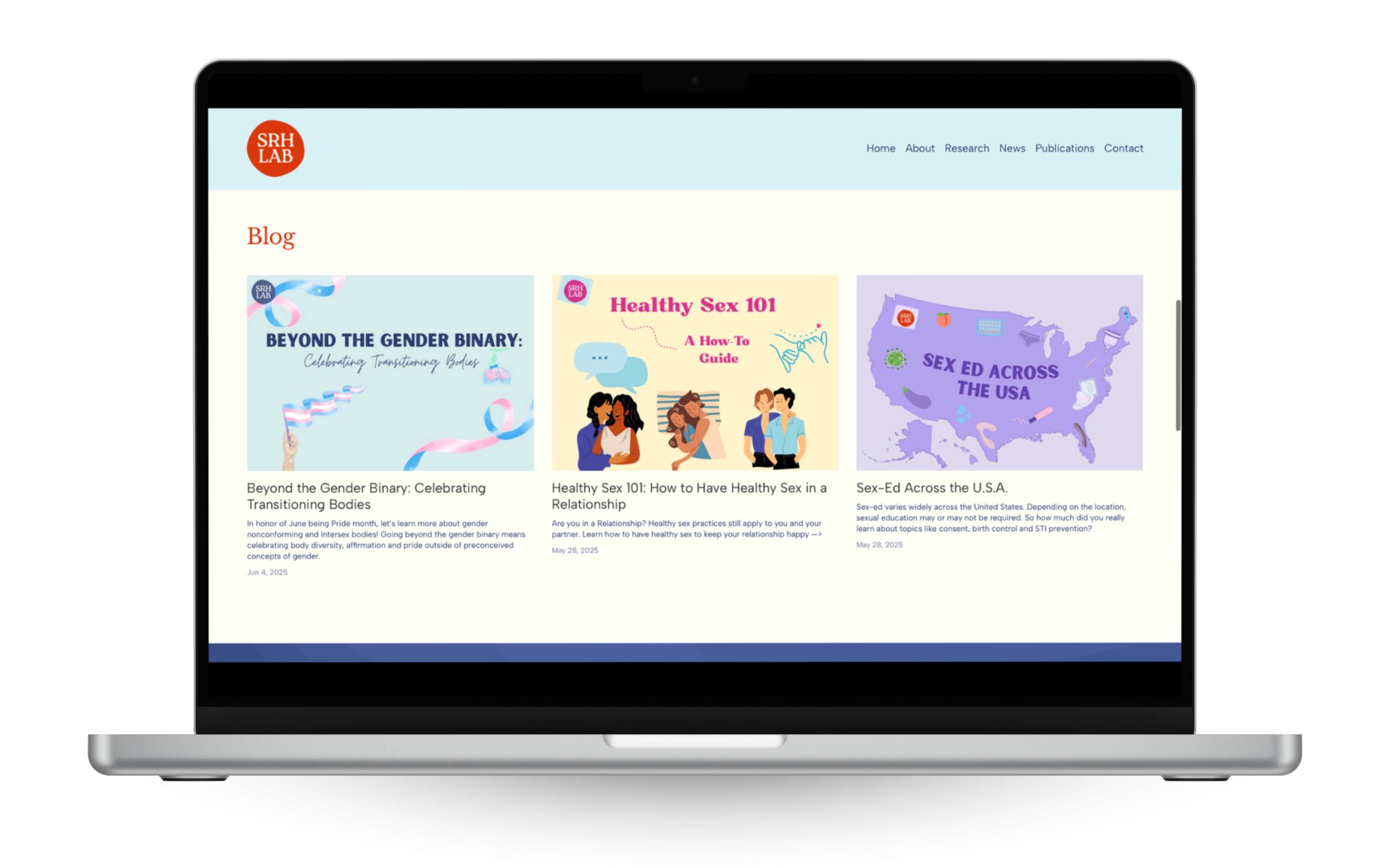
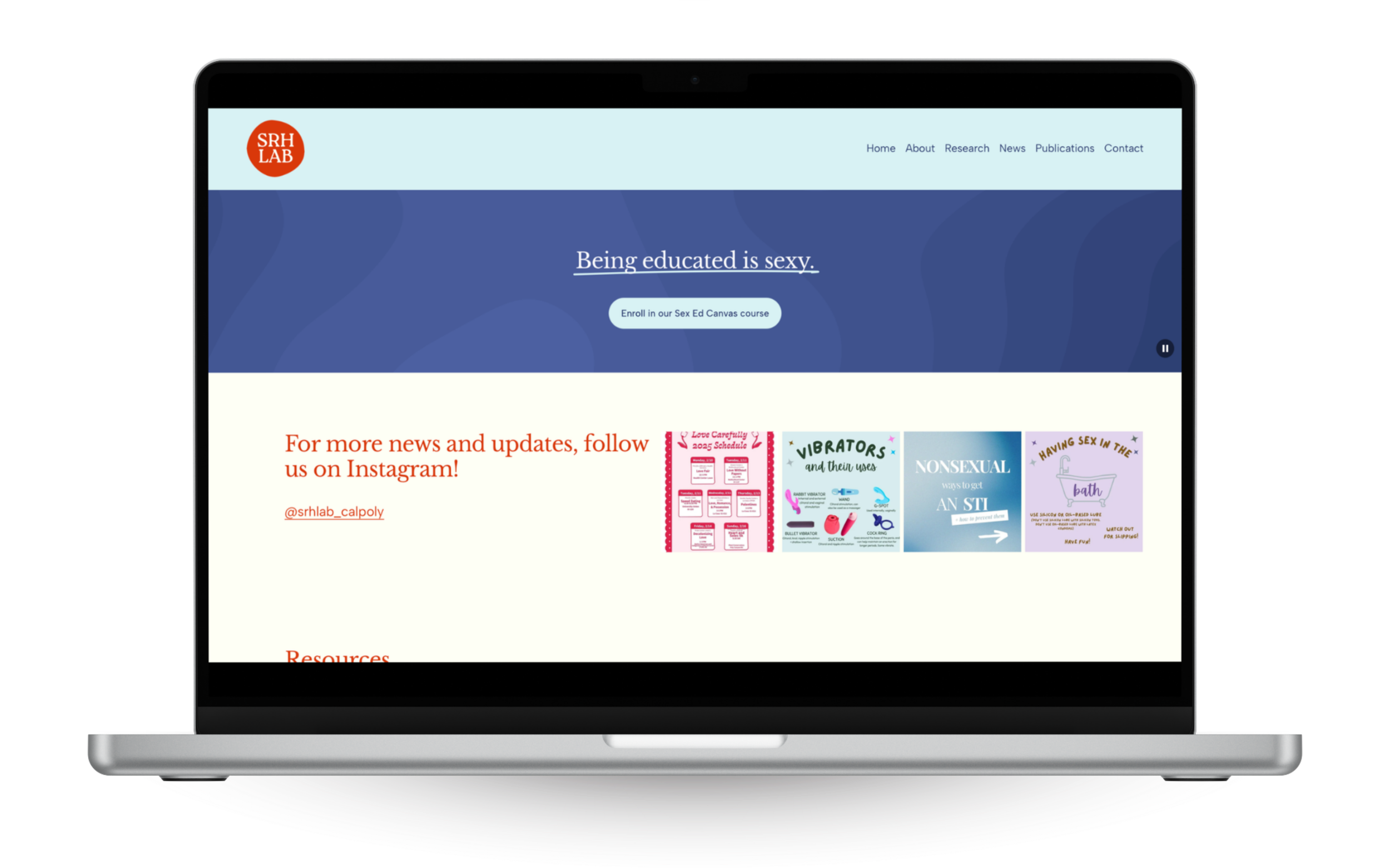
The SRH Lab needed a new website to better communicate its mission and services to Cal Poly students. The redesign focused on increasing visibility, improving accessibility, and introducing features such as a blog, event listings, and social media integration.
Challenge
The existing site was outdated, lacked key features, and had low recognition among students. The goal was to create a credible, user-friendly platform that clearly conveyed the lab’s educational and health resources.
Research and Insights
I analyzed Cal Poly’s student demographic data and benchmarked competing campus health resources to identify opportunities for differentiation. To overcome low awareness, I conducted creative outreach—boothing, interviews, and surveys—to understand student needs and perceptions. Findings revealed that students wanted straightforward information, event updates, and a tone that felt approachable yet professional.
Strategy
User Personas
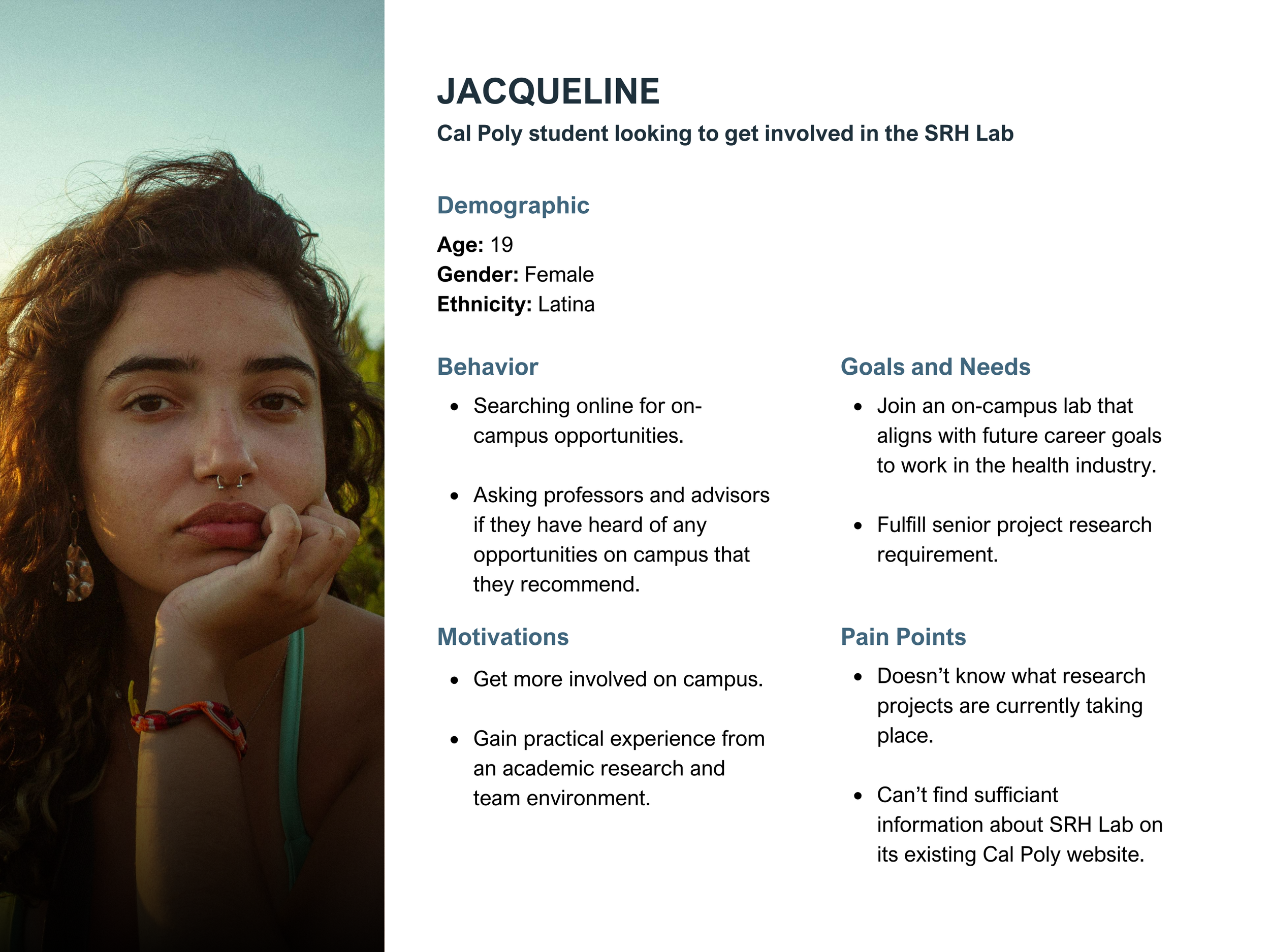
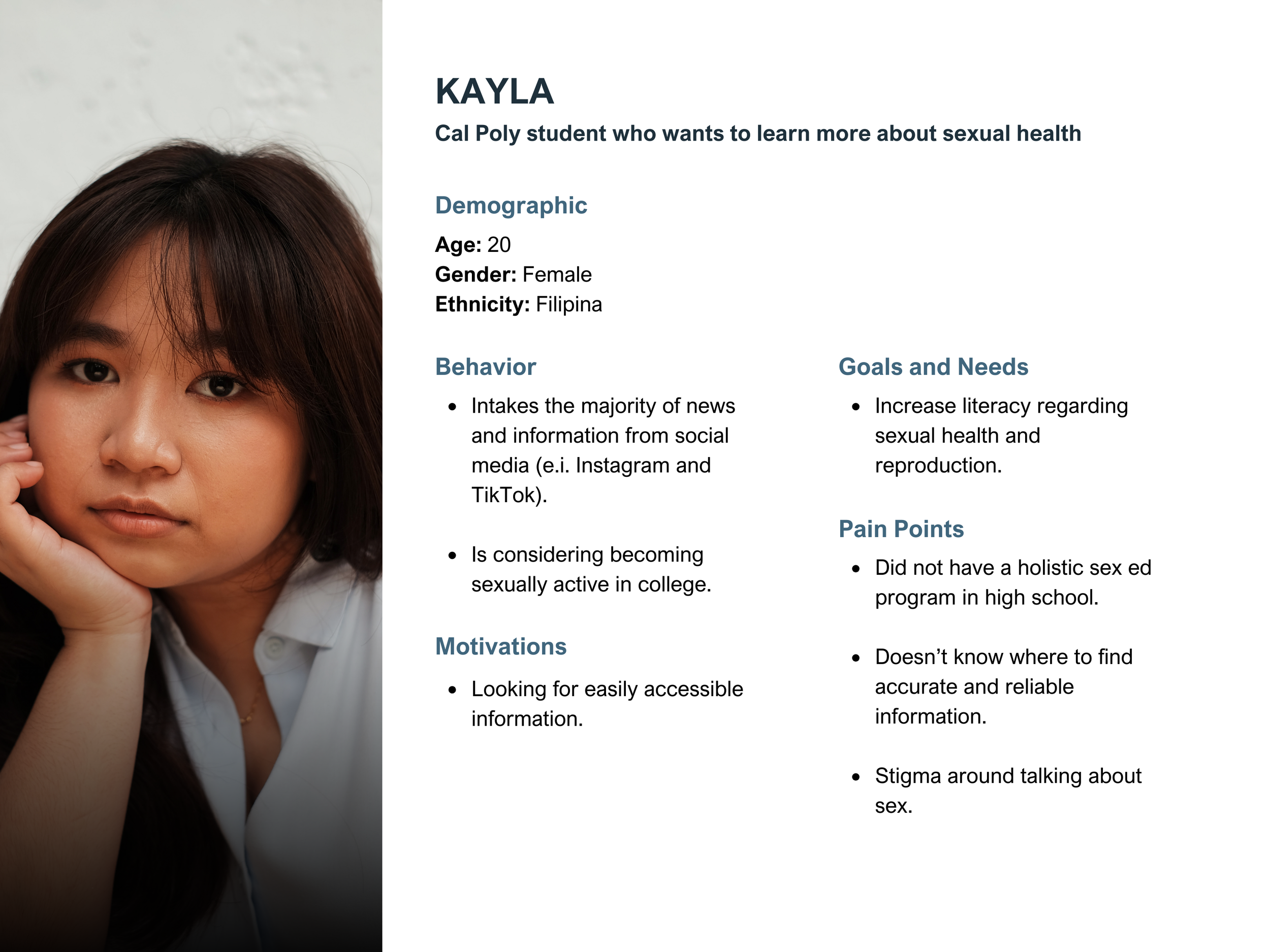
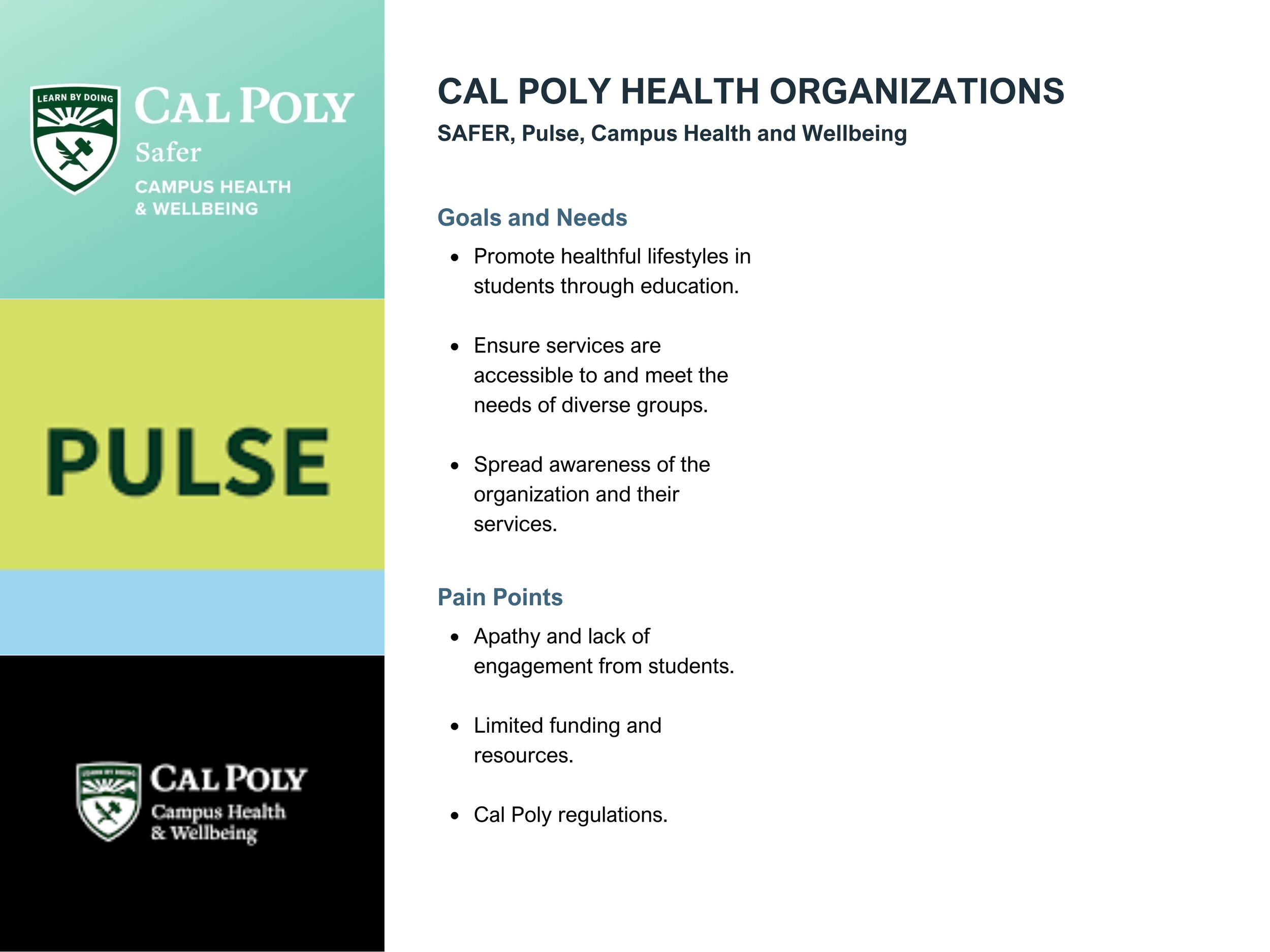
After surveying Cal Poly students and reviewing benchmark data, I created three user personas to guide design decisions: students looking to participate in the SRH Lab, students seeking reliable health information, and Cal Poly health organizations. Each group had distinct goals, so the website was designed to provide clear, intuitive pathways for all users. The health organizations, while separate entities, were considered collaborators rather than competitors, as they work together to deliver services and events that support students holistically.
Sitemap
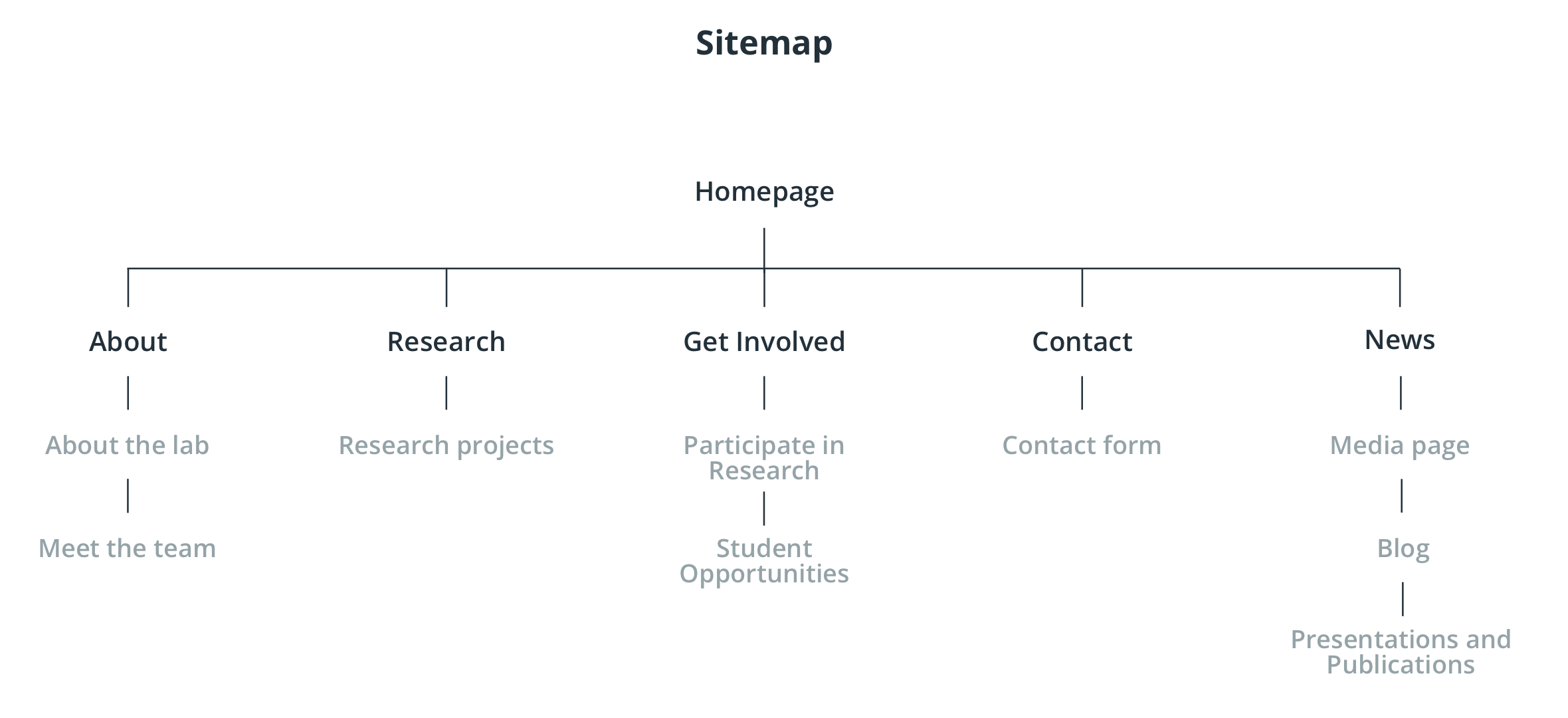
I created a sitemap to organize content and improve navigation. Using extensive documentation provided, I categorized the required information into clear, intuitive tabs to make the website easy to navigate.
Solution
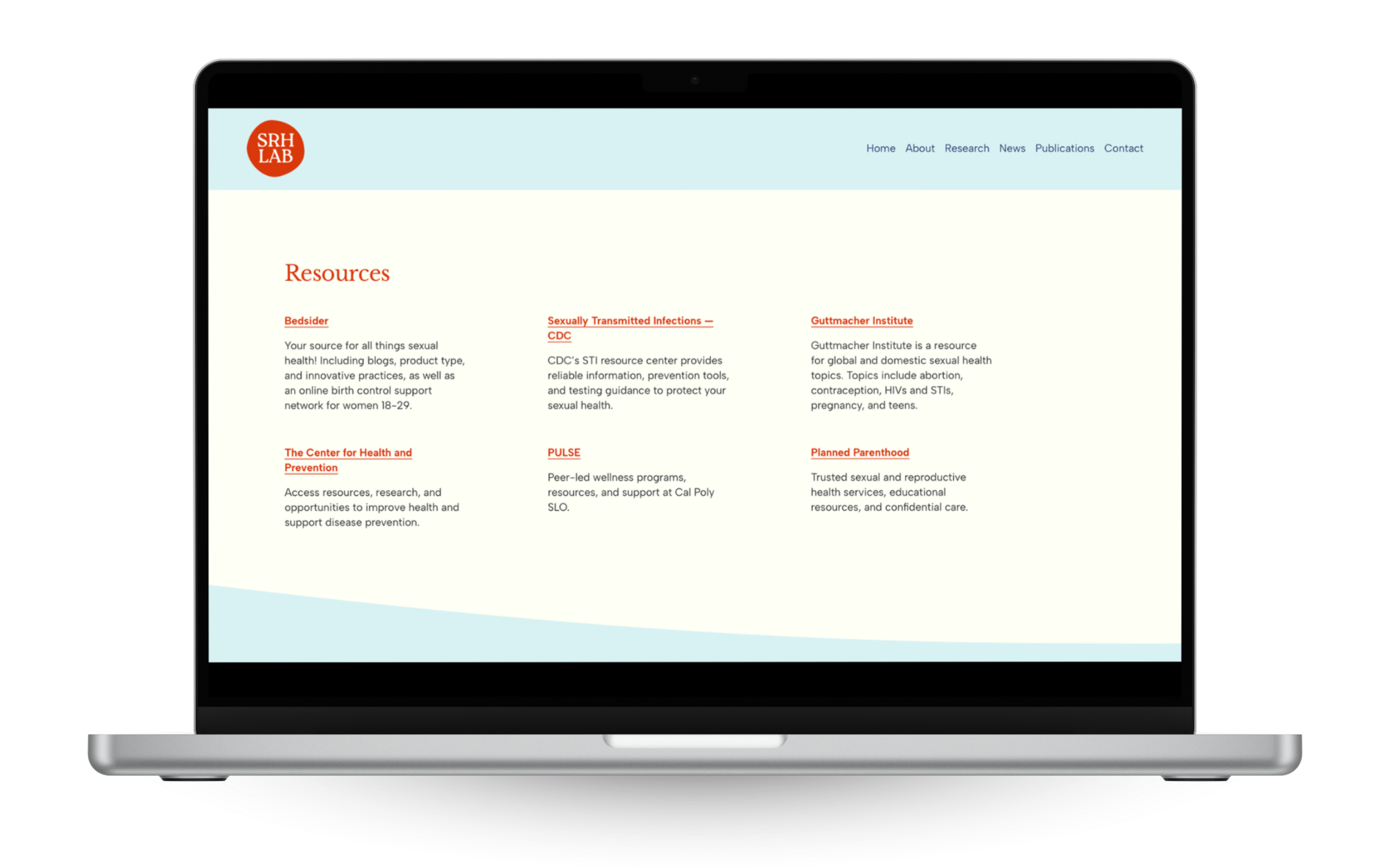
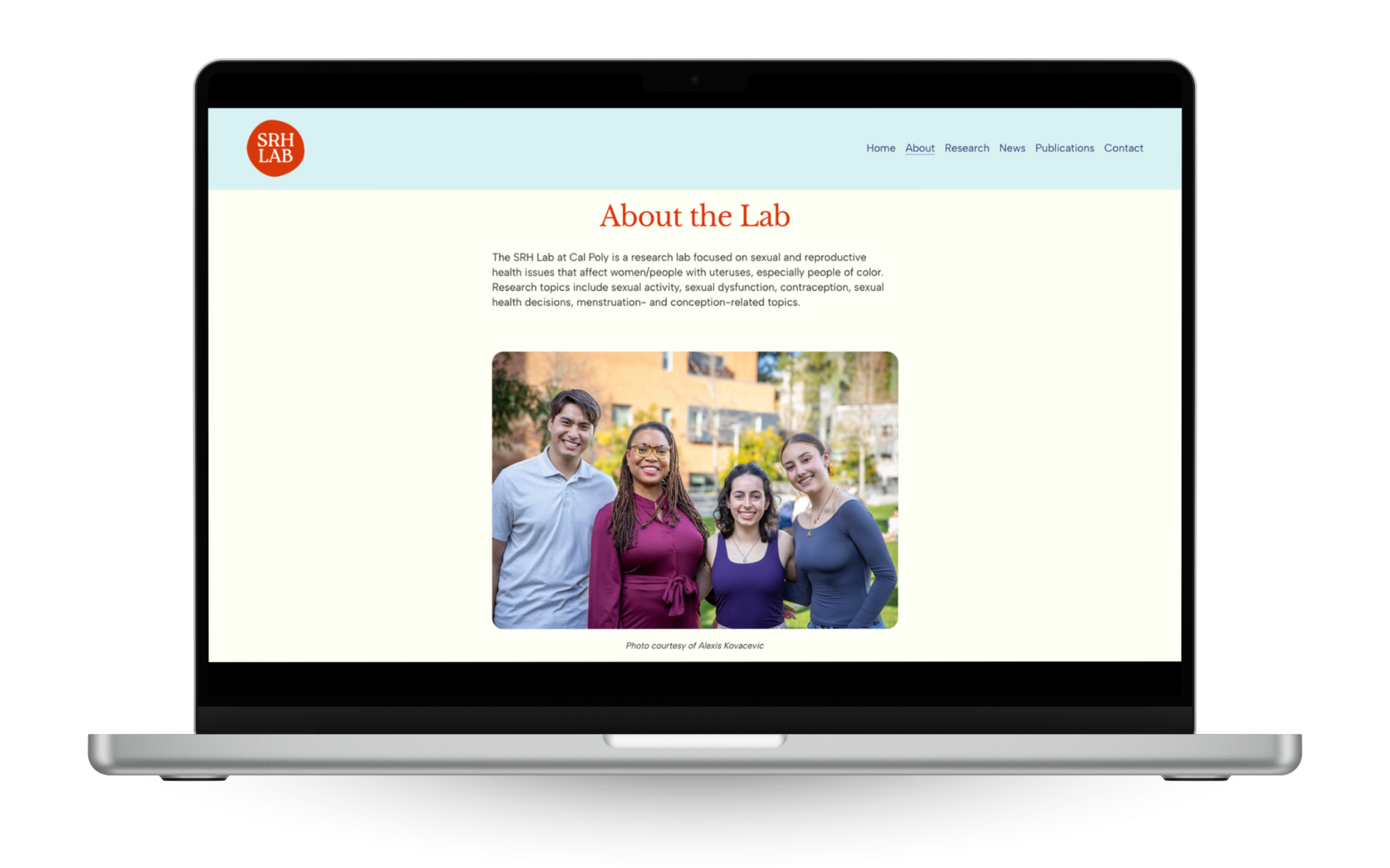
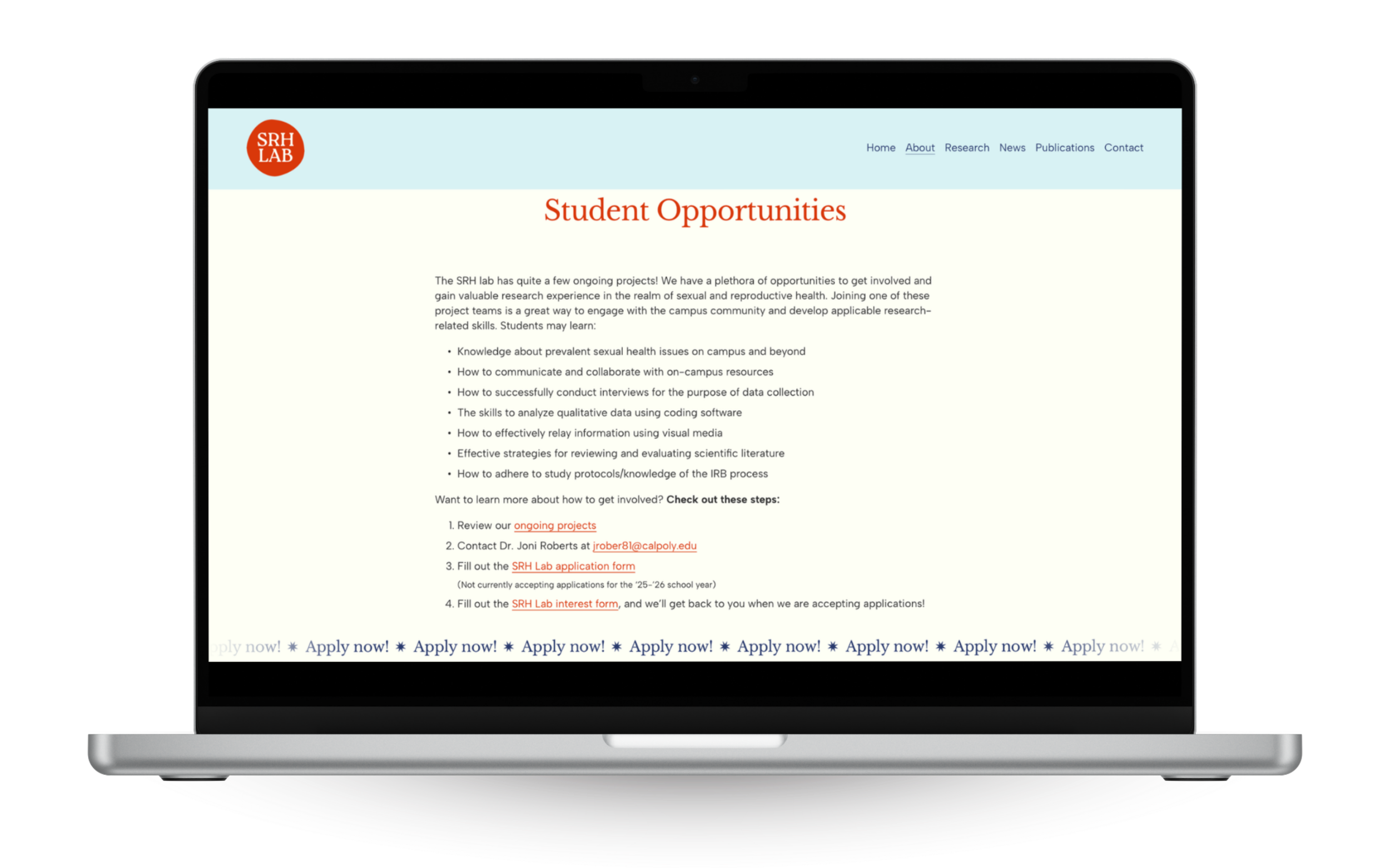
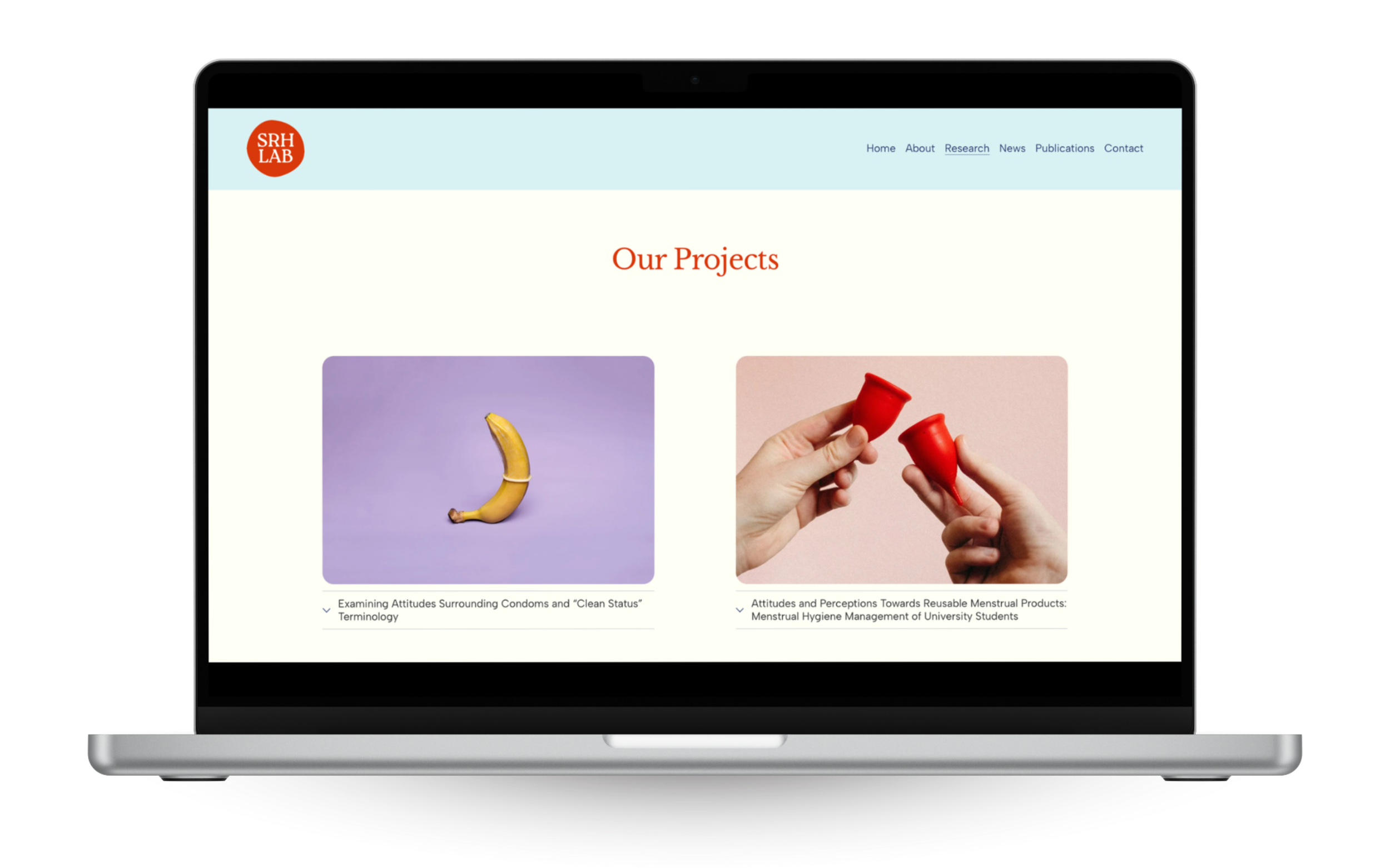
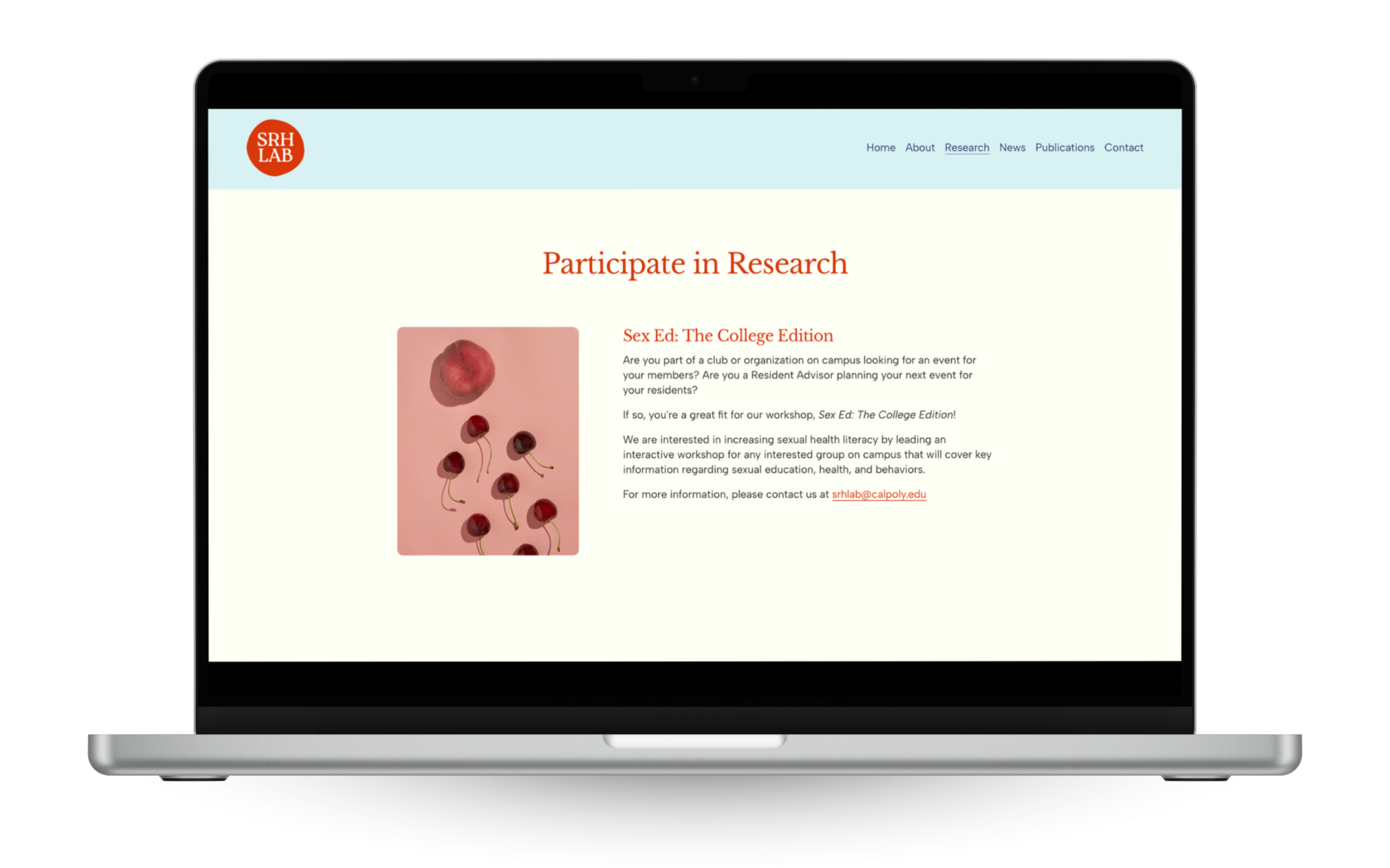
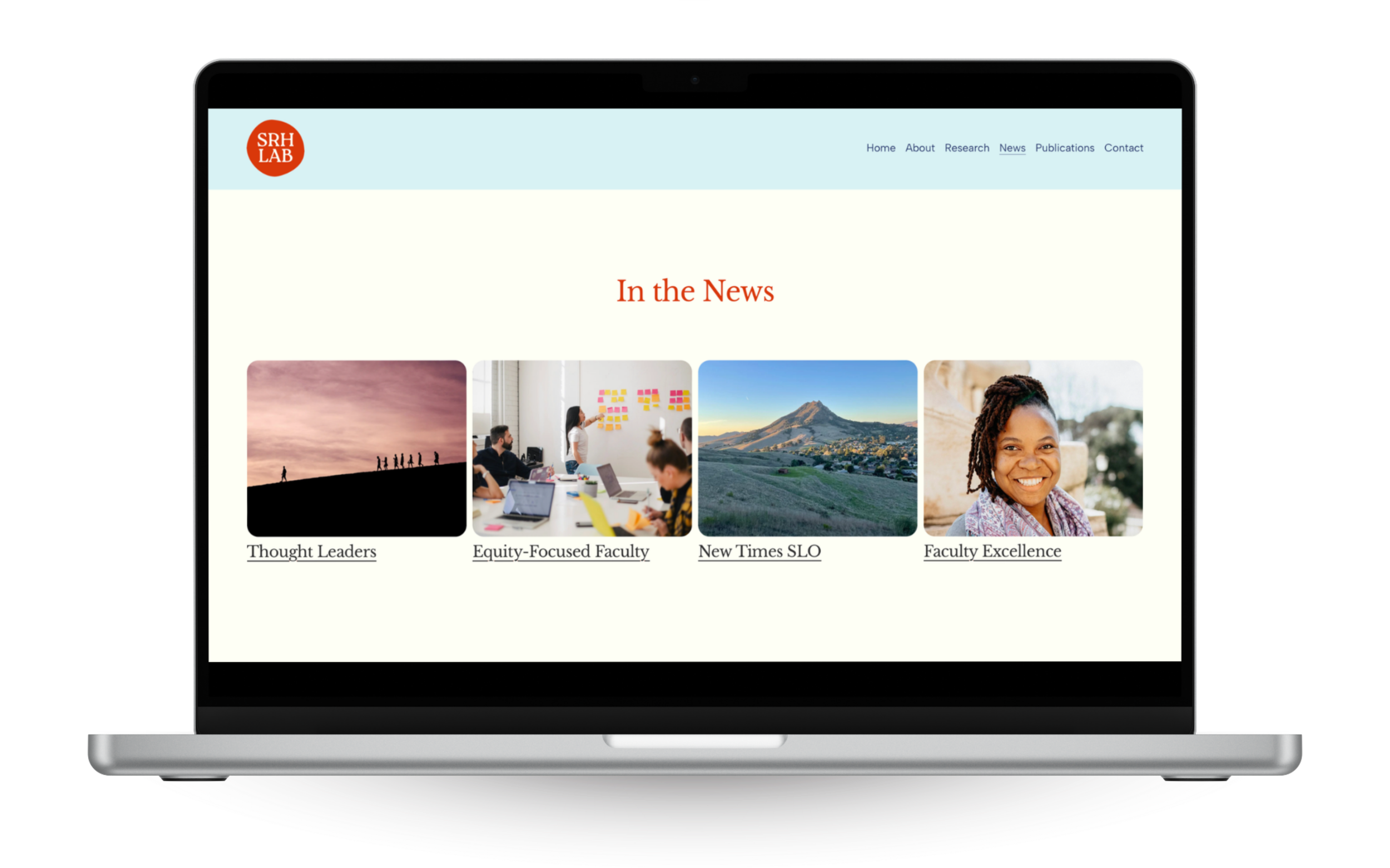
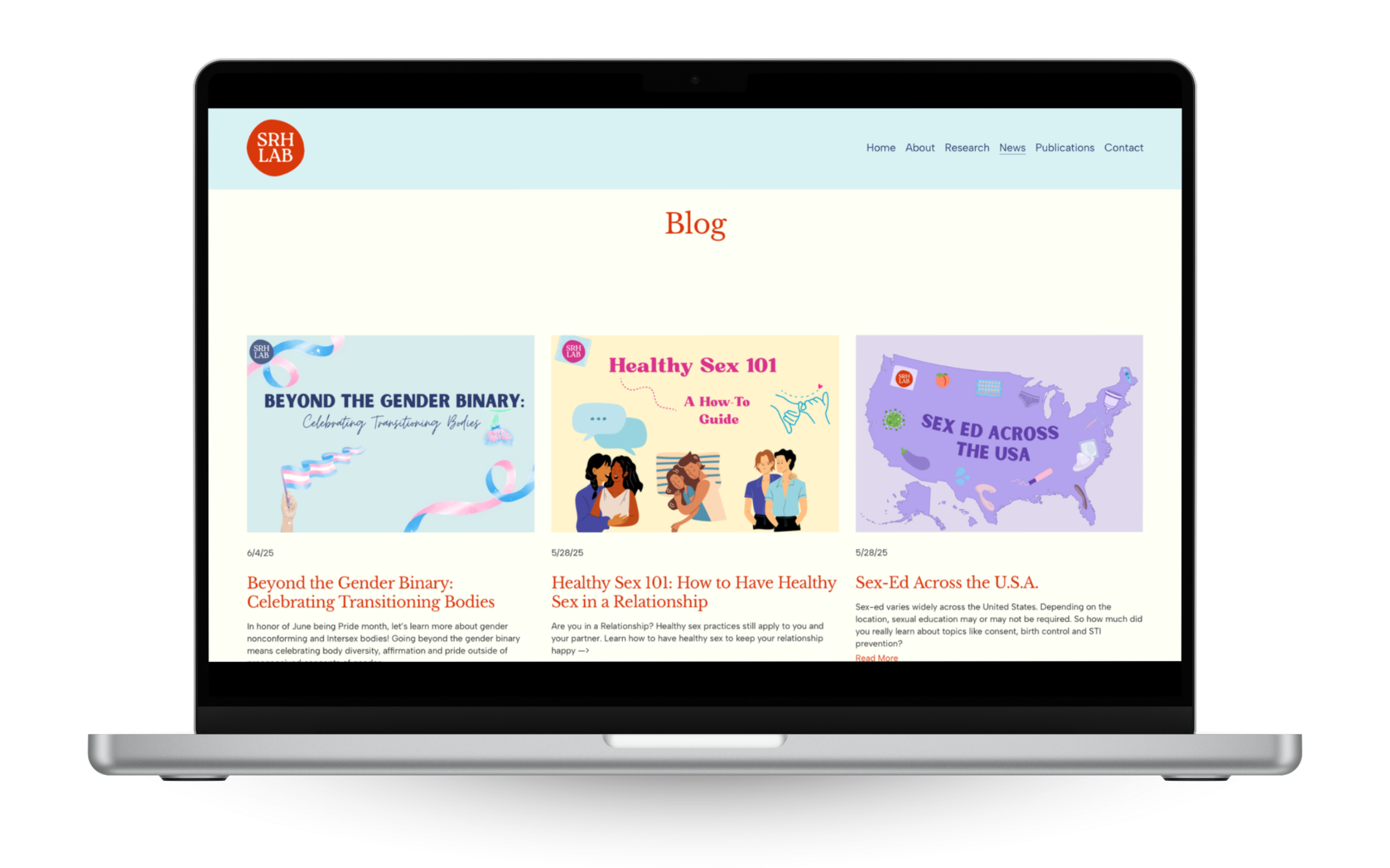
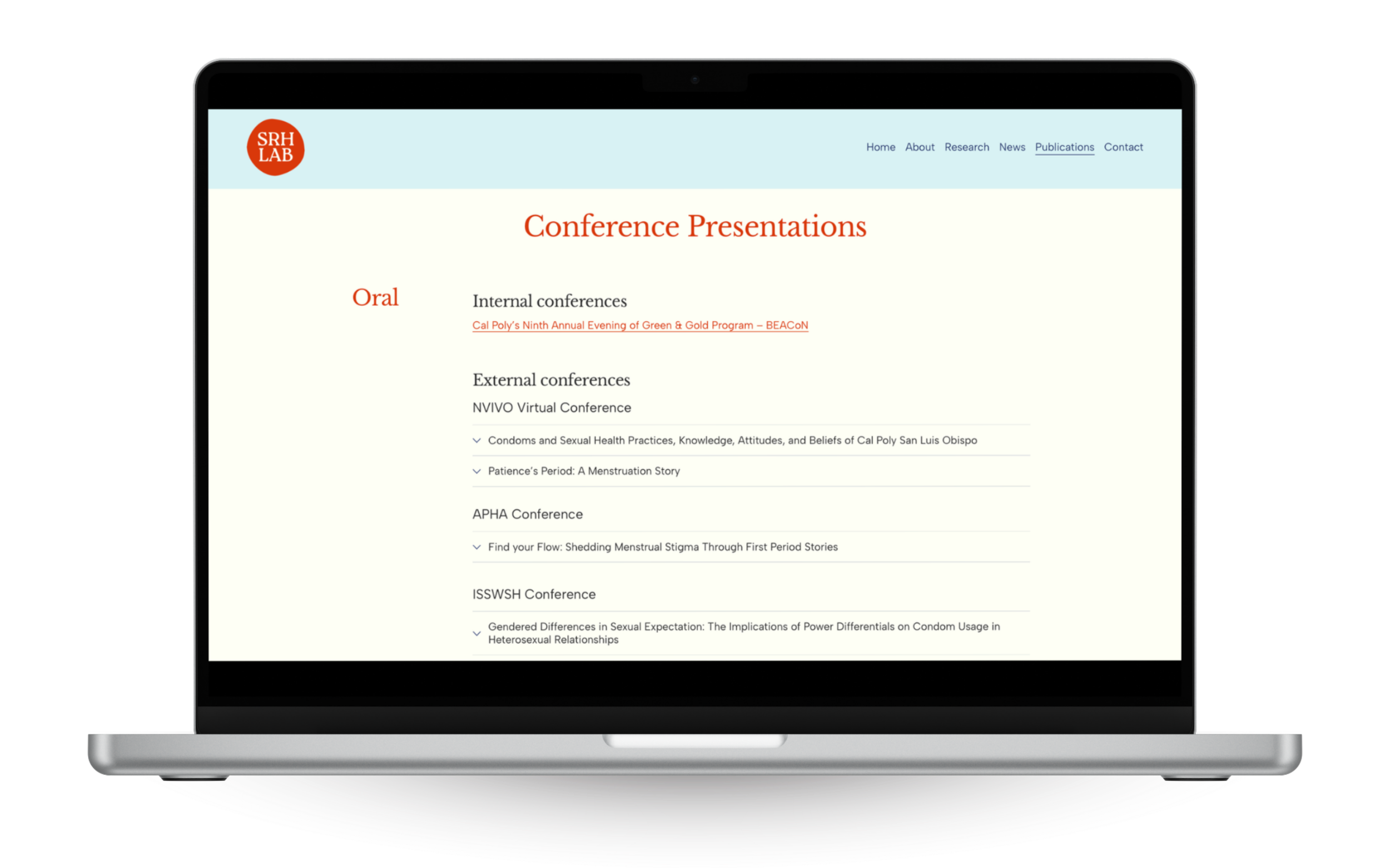
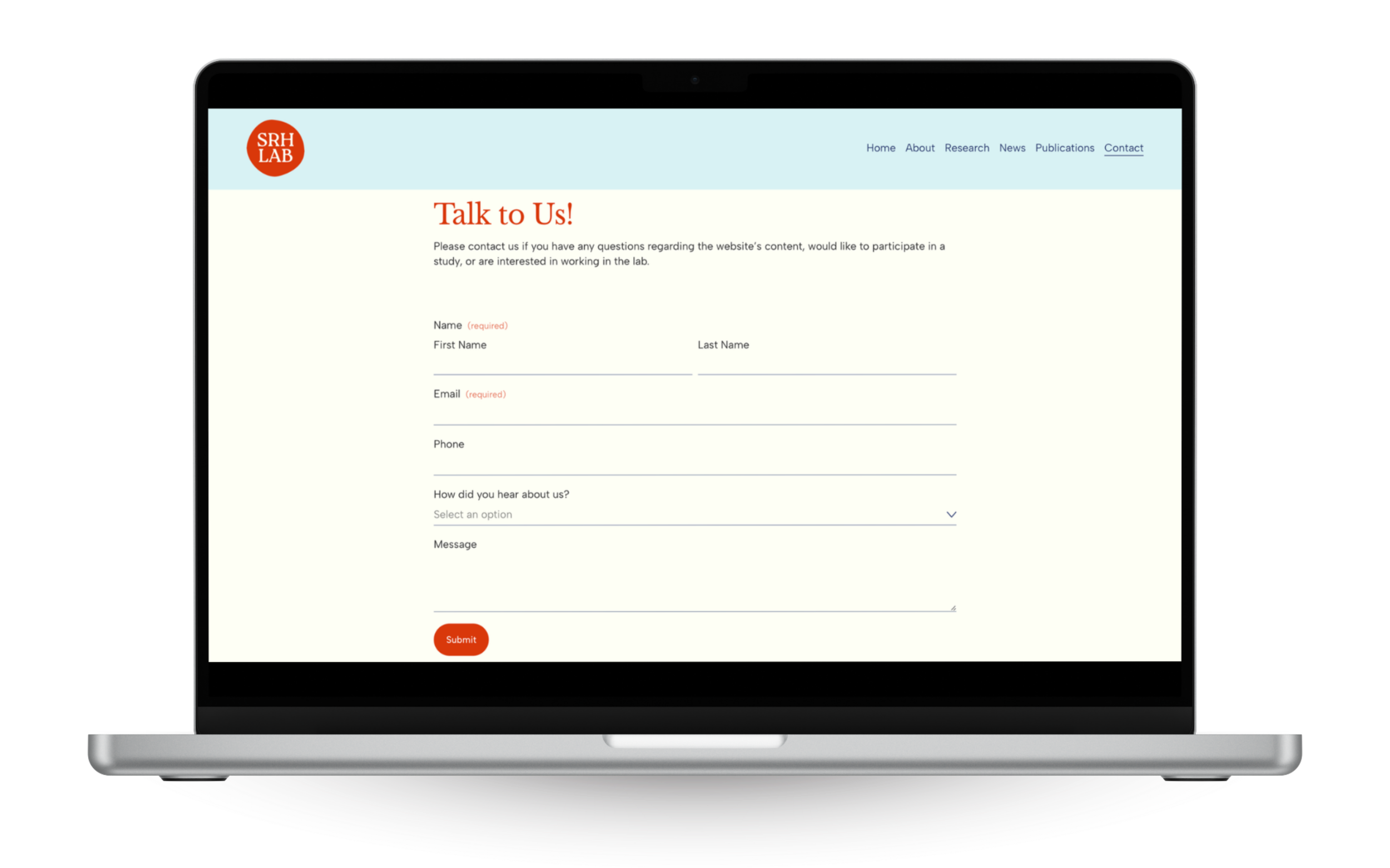
I designed a responsive website prototype emphasizing clarity, accessibility, and visual credibility. The new layout simplified navigation, prioritized educational content, and incorporated a blog and events section. I adapted the design for Squarespace’s technical limitations, ensuring usability and SEO best practices were maintained.
Impact
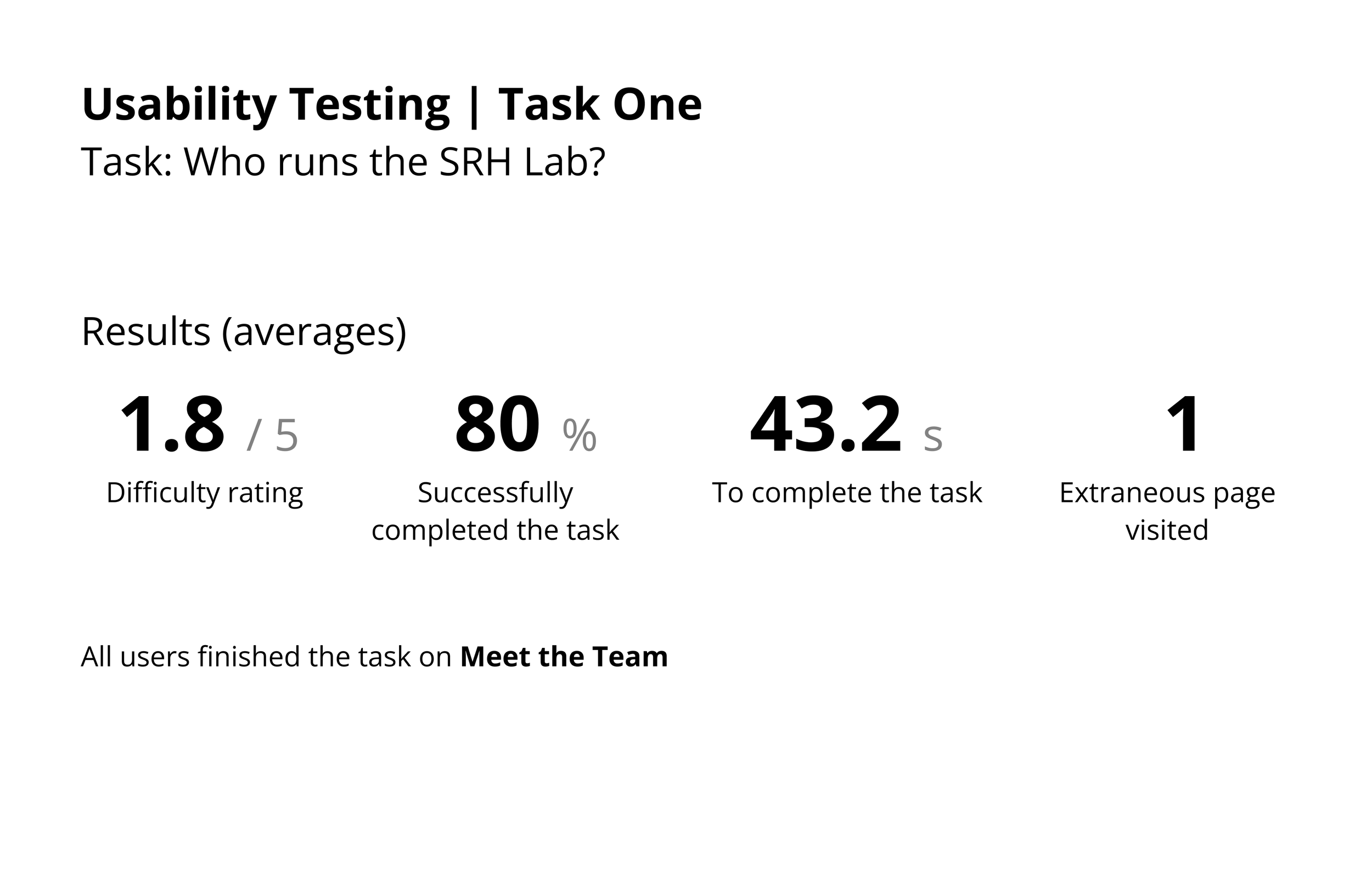
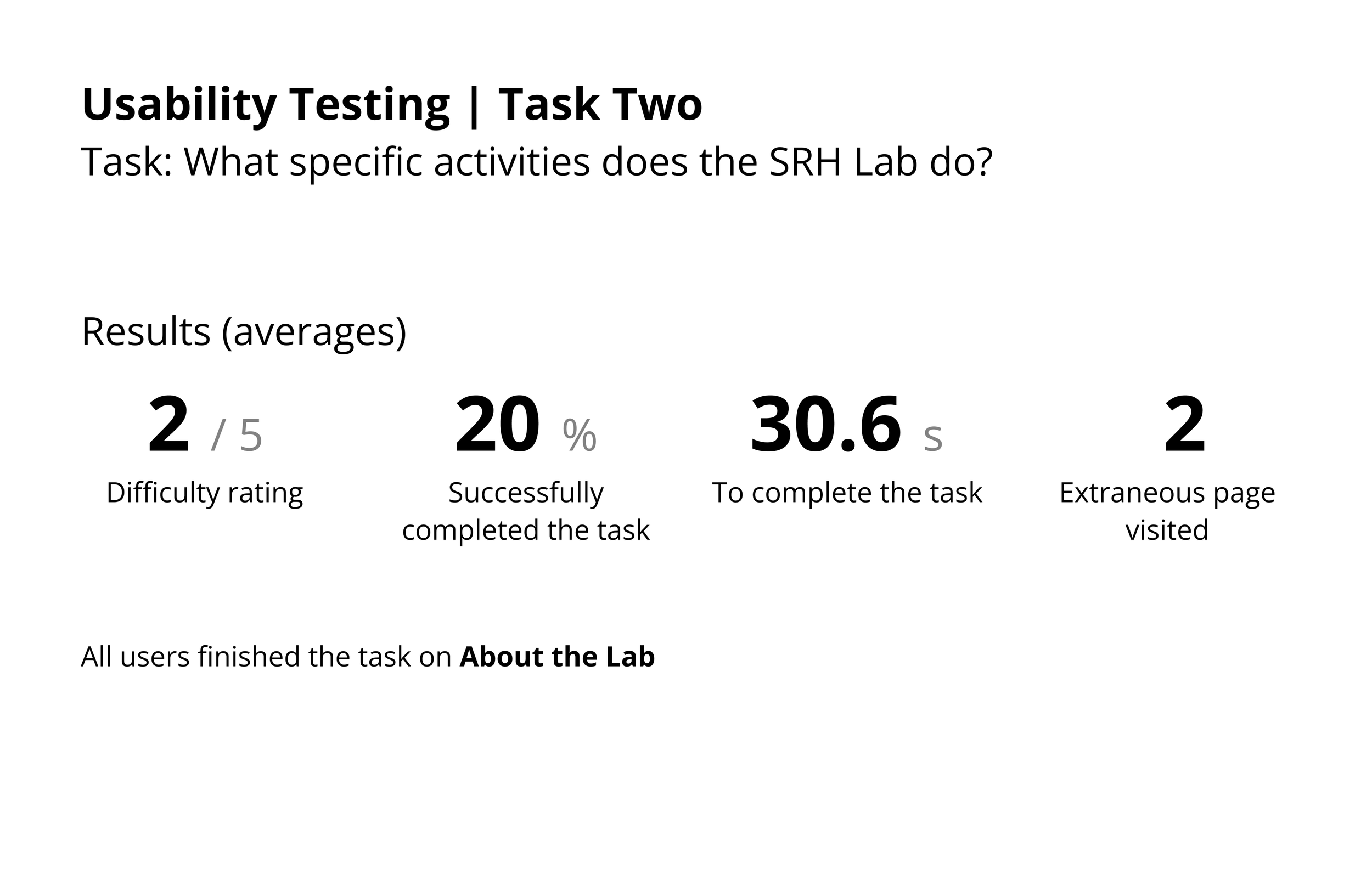
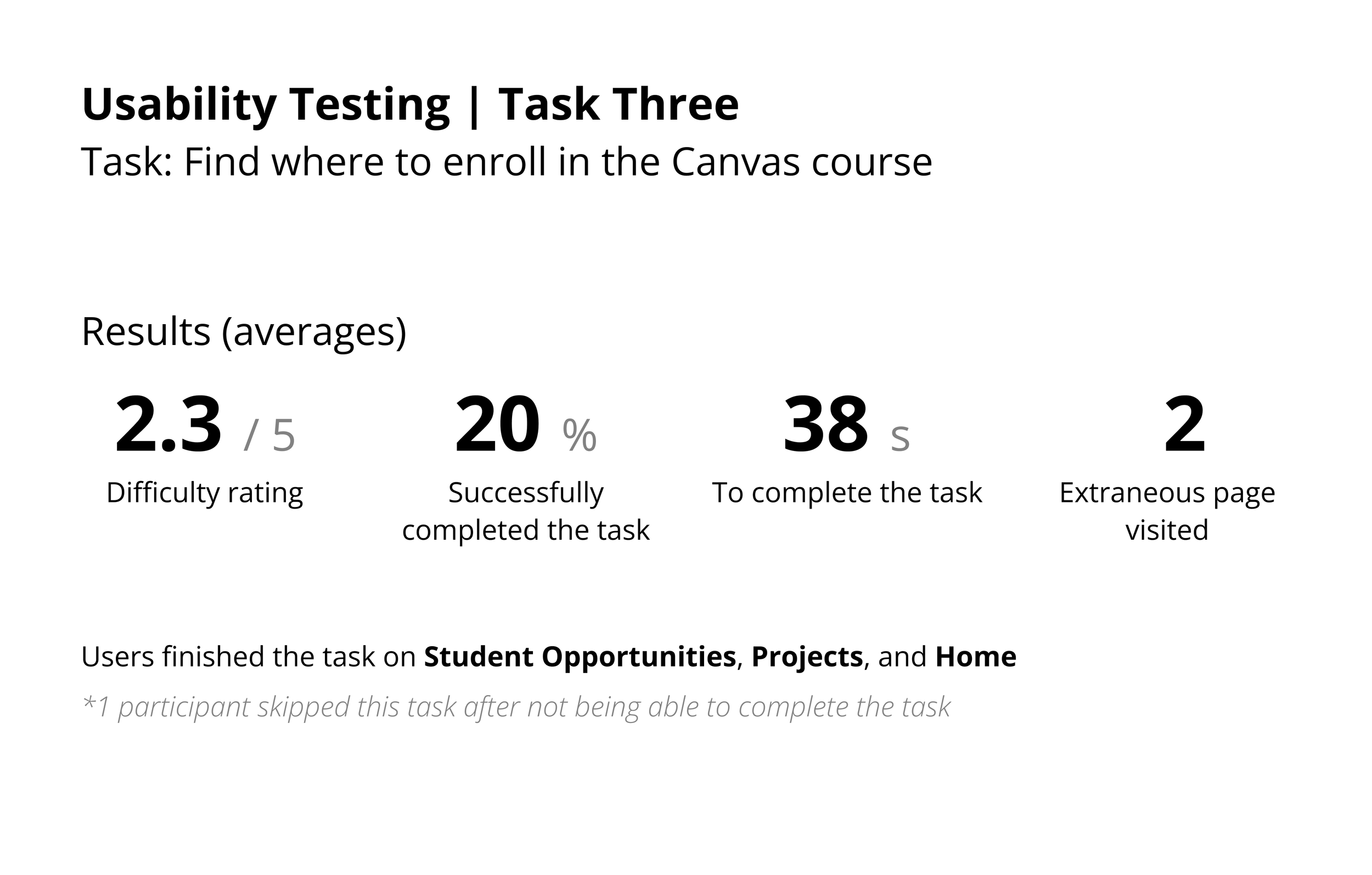
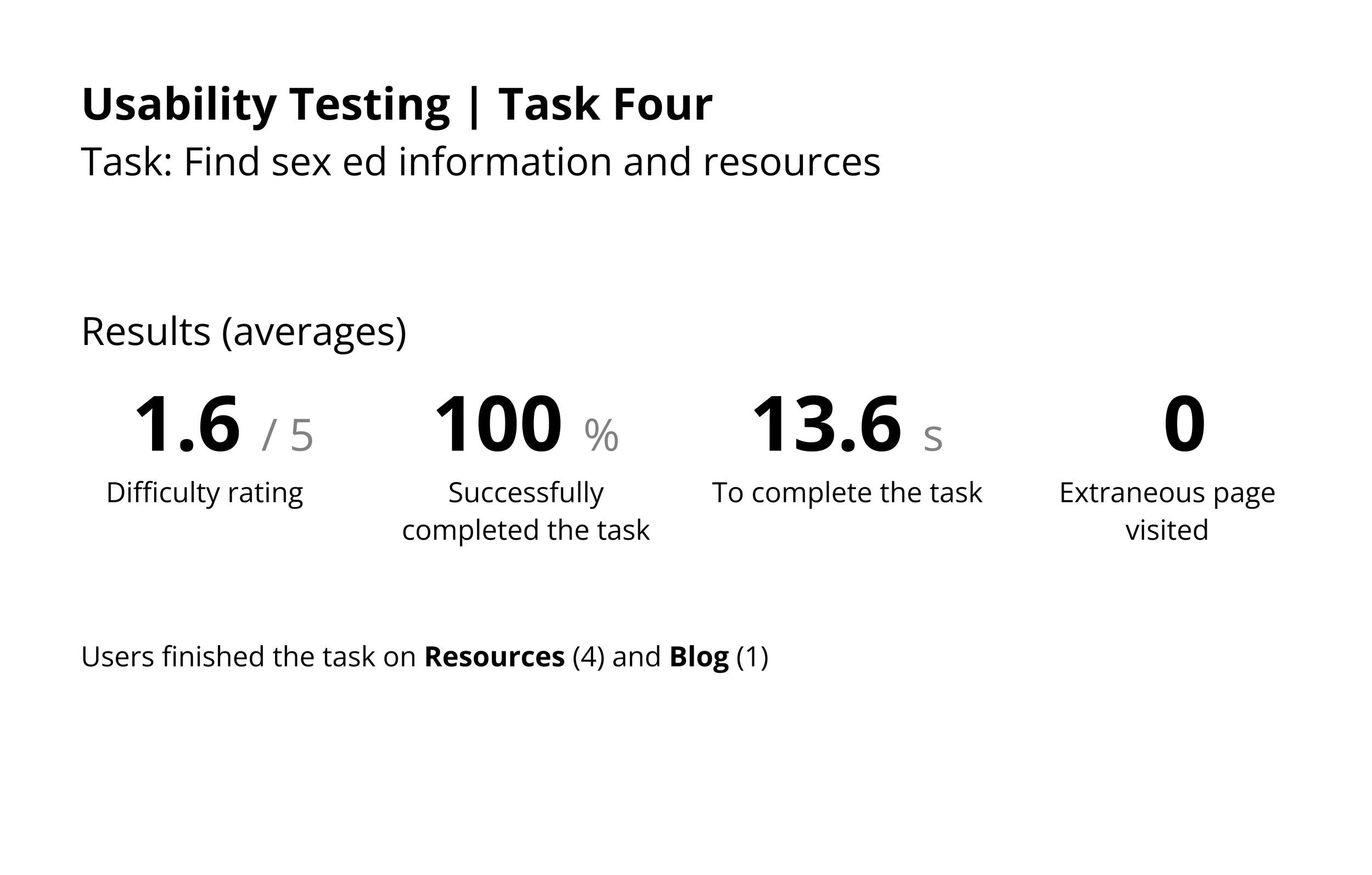
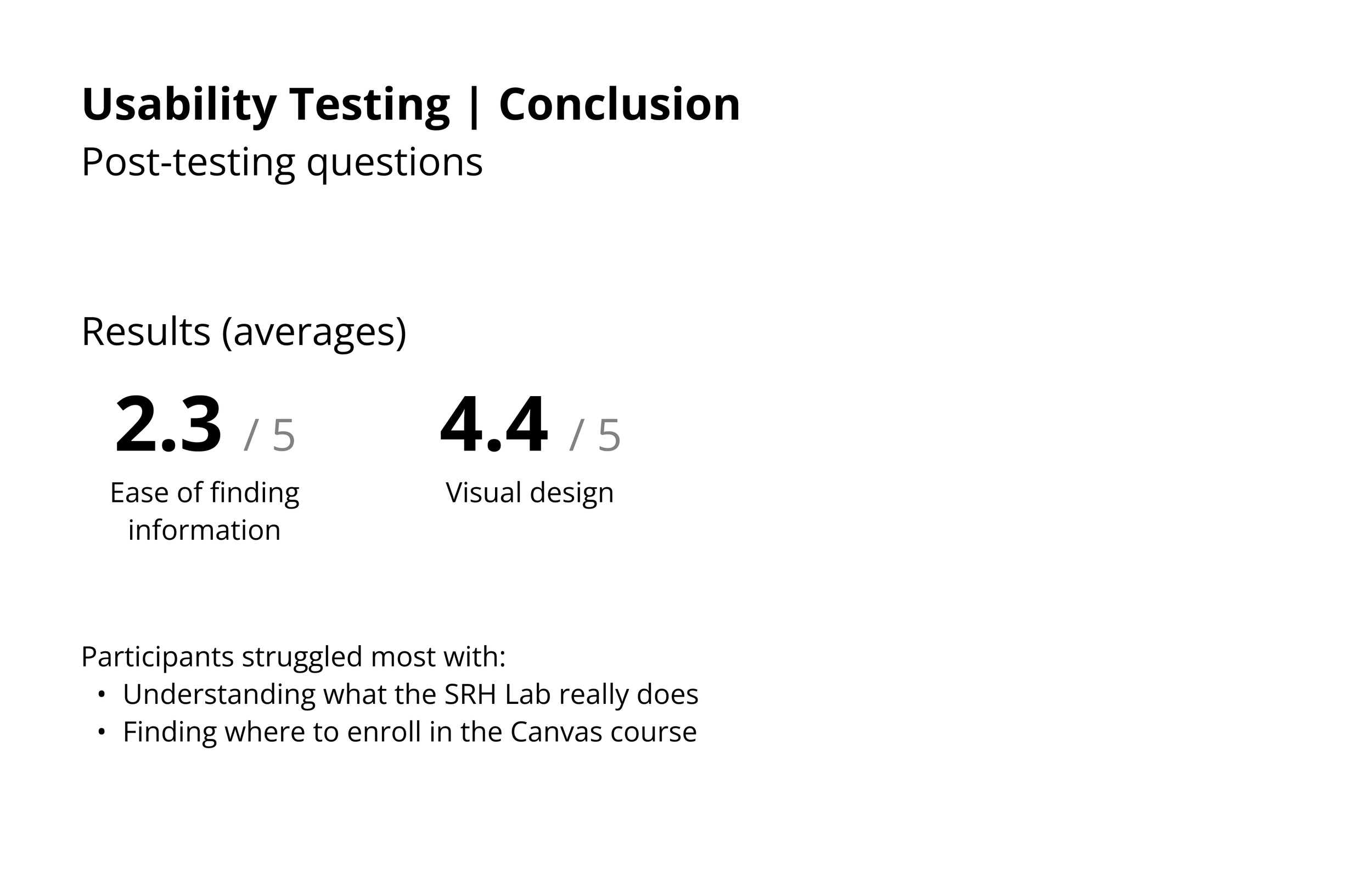
The prototype and proposal established a clear design direction for the lab’s online presence. Feedback from testing confirmed improved clarity and usability, helping position the SRH Lab as a credible student resource.
Design Process
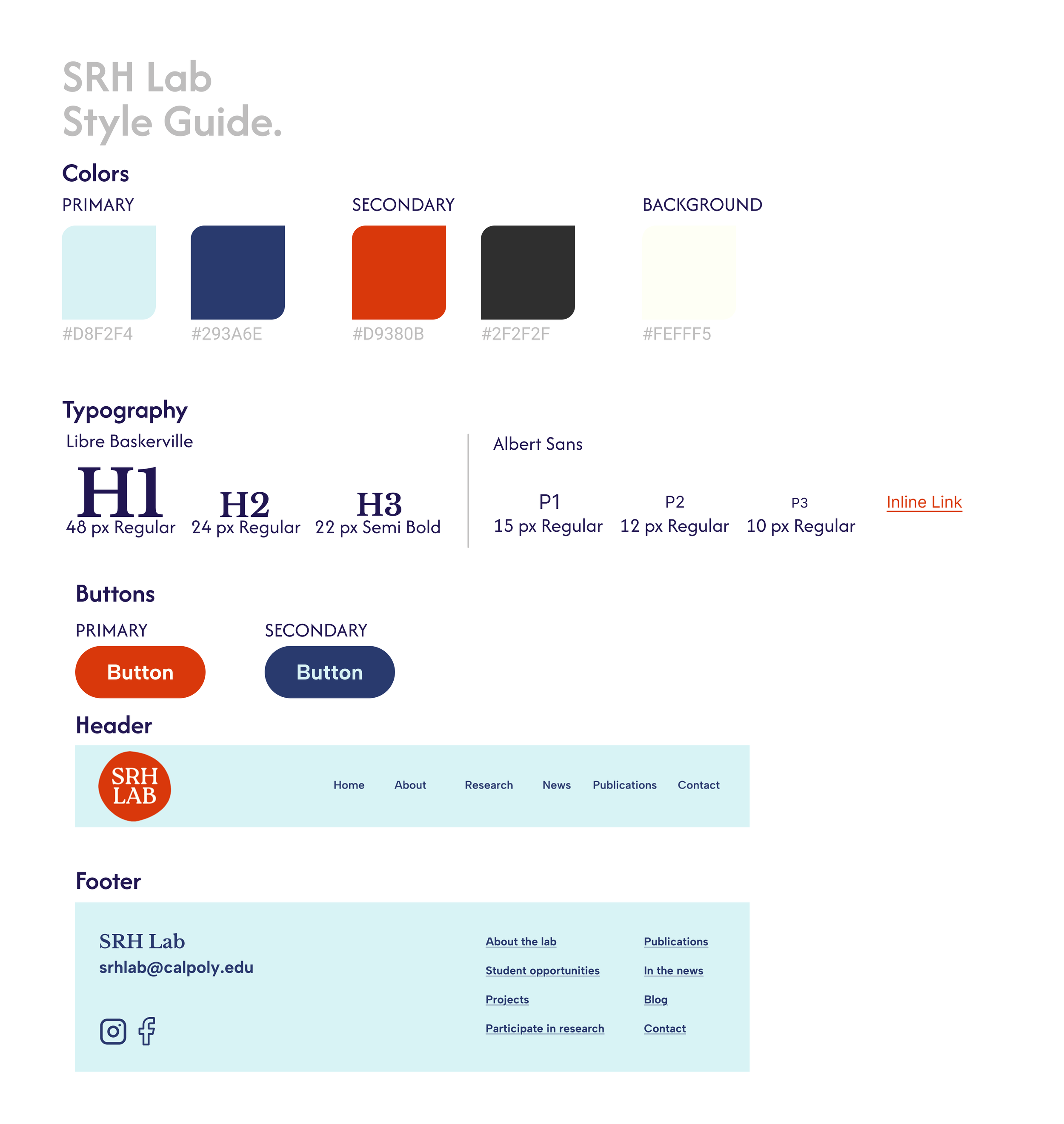
The SRH Lab lacked an established brand prior to the website, so we carefully selected colors and typography to balance credibility with approachability. Blue was chosen for its association with medical information, complemented by orange to add warmth and personality. Typography was selected for legibility while maintaining a friendly tone. Early iterations of the style guide featured pinks and purples, but user feedback showed some students perceived the palette as less relevant to them, leading to a more inclusive, balanced design.
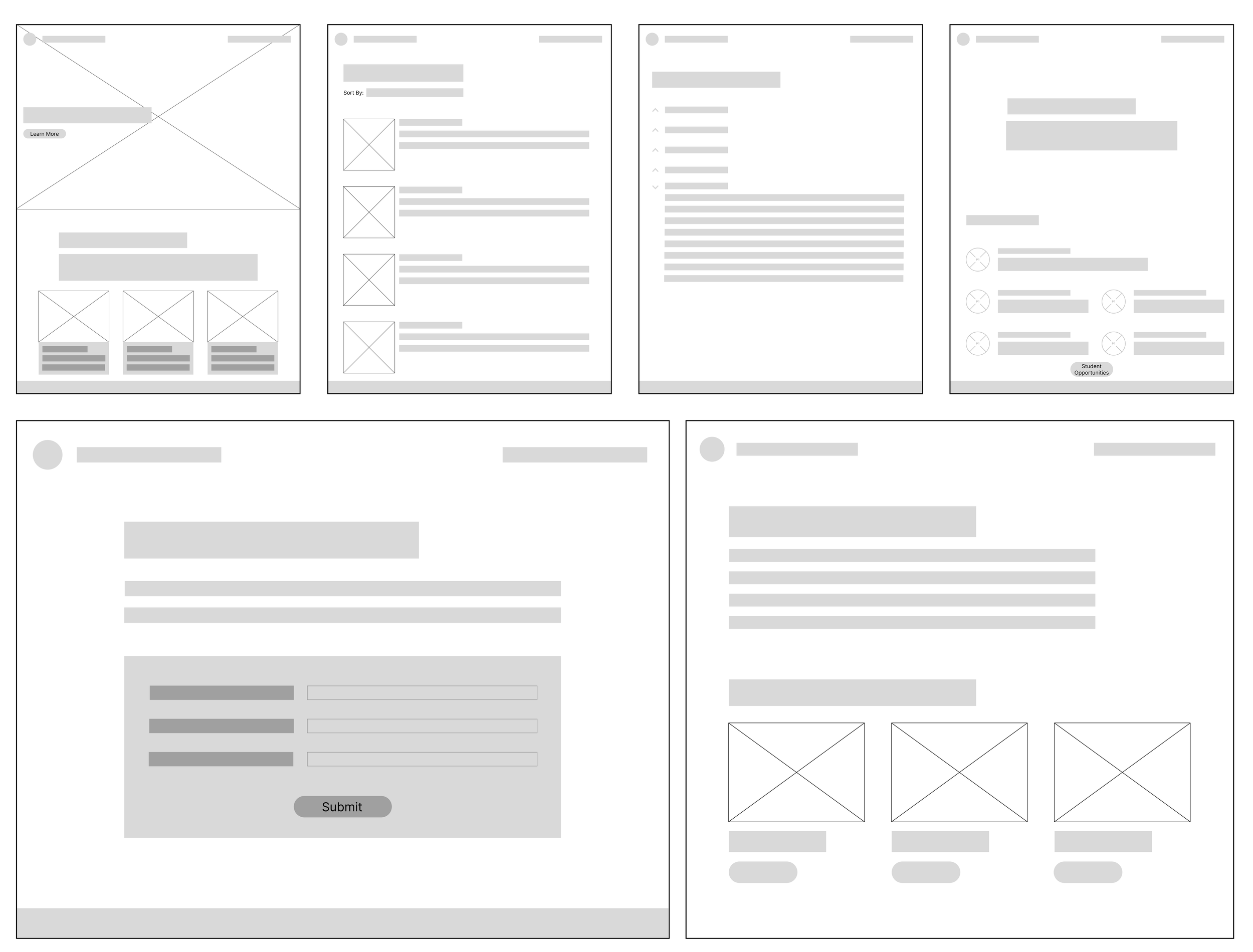
I created low-fidelity wireframes in Figma to map out each page’s structure. Due to Squarespace’s template constraints, my design partner and I moved efficiently from low-fidelity to high-fidelity designs, streamlining the workflow.
Recommendations
Redesign the homepage
Highlighted text on hero section looks unfinished
Make it more intuitive so users know to scroll
Focus on providing resources to students (restructure website)
Make News, Publications, and Projects less prominent
Make Canvas, Blog, and Resources more prominent
Can consolidate Student Opportunities and Participate in Research
Conduct more research focusing on information architecture
Key Learnings
I developed creative data-collection strategies in low-recognition contexts and learned to balance user needs, organizational goals, and platform constraints within a tight timeline.